Italiano


- Out-of-Stock


We accept payments quickly, easily, and securely.

Express Courier
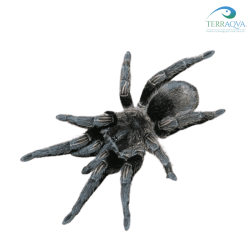
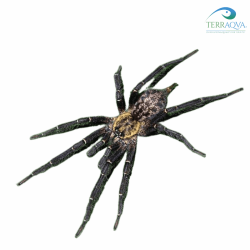
Heterothele gaboensis is a petrified tarantula, which creates several cobwebs in terrarium and keeps small even when adult;
SIZE: S-0.5 / 1cm LS; M-4/5 cm LS; it is maintained on dimensions not exceeding 7 cm from adult legspan (LS)
ORIGIN: Gabon
AMBIENT VALUES: temperature 26 ° -28 ° C daytime, 23-24 ° C nighttime humidity 65-75%
FEEDING: small insects for spiderlings (they prefer drosophile or small crickets or cockroaches) and, from size M, meal insects (crickets, cockroaches, worms, locusts) of adequate size are good. Medium sized isopods, quite voracious. In particular crickets are indicated as they are highly protein.
RECOMMENDED EQUIPMENT: small terrarium or faunabox for spiderling; for specimens of medium size and adults, terrariums starting from 30x30x20 can be used;
The substrate should be at least 10 meters high with peat and / or coconut fiber, along with tropical plants, a bowl with water or hydrogel always present and a natural or artificial shelter where it will burrow during the day or to consume prey. Very light sprays are required every 2 days, as the substrate must still be dry but not excessively, creating different humidity areas
HABITS: purely fossor arachnid, loves to create several cobwebs
AGGRESSIVITY: 5 - slightly aggressive but, nevertheless, rather easy to manage
RAPID GROWTH: rapid, compared to other varieties, with a life expectancy of about 6/7 years (females)
STATUS CITES: no
CLINICAL / TOXICOLOGICAL INFO: WCH ADELAIDE UNIVERSITY; AUSTRALIA
Specific References
RARITY - Much sought after by breeders for its particular color
Aggressiveness level 5 - Medium, as it is slightly unpredictable in behavior
Widespread in the various tropical areas of the Peruvian tropical forest
Fast growing nocturnal terricolous tarantula lives up to 7-10 years (females) and 4-5 males
RARITY - not easily found on the market
Aggression level 8 - particularly defensive, similar to the Theraphosa genus
Distributed in Ecuador and Peru
Ground-dwelling tarantula, medium growth, up to 25 cm including legspan!
Aggressive level 1 - very docile suitable for neophyte
Size S/M - about 0.5 to 2,2 cm and high growth
With vibrant colors and a calm temperament: perfect for beginners!
Aggressive level 7 - aggressive and unpredictable character
Widespread mainly in Cameroon
Tarantola ditch, suitable for the most experienced
Level aggression 8 - suitable for experienced terrariophiles, quite aggressive
Opportunist, Tropical South American Environment
High and fast growth in movement
RARITA ' - one of the most beautiful and valuable tarantulas in the industry
Aggressive level 5 - very sociable towards individuals of the same species, toward the keeper in can be skittish and a fast runner
Widespread in Africa, particular Island of Socotra
Rather voracious, it feeds quietly with a varied diet based on meal insects;
RARITA - for newbies and experts
Aggression level 3 - docile but sometimes nervous and quite quick
Arboricola, typical of the Cameroon jungle
Needs a height-developed, well-ventilated terrarium
Needed humidity around 70-80%
VERY RARE - Recently discovered, in 2019, among the most beautiful collectible tarantulas
Aggressiveness level 2 - Of medium management, with a docile and non-aggressive temperament
Origin in Borneo and Malaysia, within small ravines
CB specimens (very rare, being forbidden to capture or import from their places of origin)
One of the most beautiful tarantulas in the Caribbean
Aggression level 5 - aggressive and nervous temperament
Particularly widespread in the Caribbean
Terricolous and medium sized tarantula when adult (18/22 cm)
RARITY - Much requested and sought after by fans of the sector
Aggressiveness level 4 - Suitable for beginners, easy to manage
Widespread in various areas of tropical Bolivia
Small tarantula, which builds a lot of webs
Aggressive level 2 - suitable for newbies and very docile
Terrestrial, typically found in south Brazil
Average and fairly long-lived growth
Size M specimen
Aggressive level 4 - medium/high; suitable for newbies
Terricola/opportunist, tropical environment
Fast and easy-to-farm growth
Cites B Certificate