Italiano


- Out-of-Stock

RARITY - Much requested and sought after by fans of the sector
Aggressiveness level 4 - Suitable for beginners, easy to manage
Widespread in various areas of tropical Bolivia
Small tarantula, which builds a lot of webs

We accept payments quickly, easily, and securely.

Express Courier
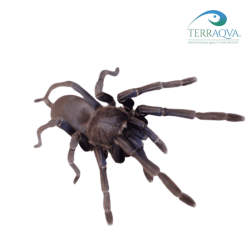
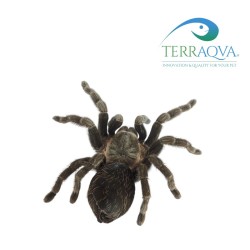
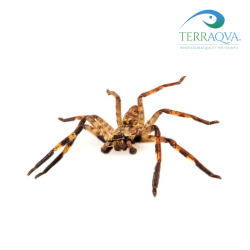
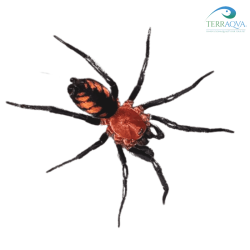
Diplura sp Rurrenabaque is a small tarantula, present in Bolivia and, to date very little is known about this arachnid, both in behavior and in other factors such as nutrition, poison etc.
DIMENSIONS: S / M
ORIGIN: Bolivia
AMBIENT VALUES: temperature 24 ° -26 ° C daytime, 20-22 ° C nighttime humidity 70-75%
FEEDING: small sized insects for scorpling, and, from size M, feeding insects (crickets, cockroaches, worms, locusts) of adequate size are good. Medium-sized isopods; In particular, crickets and locusts are indicated as they are highly protein.
RECOMMENDED EQUIPMENT: small terrarium or faunabox, starting from 30x25x25 cm. The substrate should be at least 10 cm high peat and mixed coir, together with tropical plants, a natural or artificial refuge where it will burrow during the day or to consume prey. Daily nebulizations are necessary to keep the internal humidity constant, while maintaining adequate ventilation. Using dry leaves and roots further helps recreate the right set-up for this rare scorpion
HABITS: purely diurnal arachnid, semi-arboreal, which loves to weave numerous cobwebs
AGGRESSIVITY: 3 - although with a calm temperament, this arachnid has a poison and a behavior not yet fully documented and, therefore, the utmost caution is recommended in its management
RAPID GROWTH: n.d.
STATUS CITES: no
CLINICAL / TOXICOLOGICAL INFO: WCH ADELAIDE UNIVERSITY; AUSTRALIA
Specific References
Difficulty level 2 – very docile and suitable for beginners
Mainly arboreal species
Can be kept at room temperature, provided it does not drop below 20°C
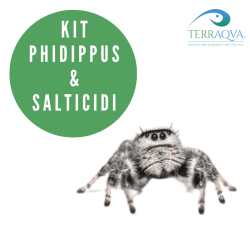
Complete kit to start the breeding of a Phidippus regius and other spiders
The kit contains feed and decoration!
RARITA ' - It is not easily found on the market compared to others of the same family
Aggressive level 8 - medium/high, assumes the classic defensive posture if threatened
Widespread in various areas of Brazil and Suriname
Tarantola characterized by the coloration on the legs, similar to human bones
RARITY - requested and sought after, as well as being a recently appeared tarantula on the market
Aggression level 3 - Not aggressive, it can still present the classic defensive posture
Widespread in Guyana and Brazil
Easy to manage, being less delicate than similar varieties such as Avicularia
Aggressive level 5 - medium/high; very fast and nervous, not suitable for newbies
Widespread in Vietnam, Myanmar, India
Create beautiful tunnels and cobwebs inside the terrarium
Rather voracious, ditching/terricular
Aggressive level 2 - low, particularly harmless to humans
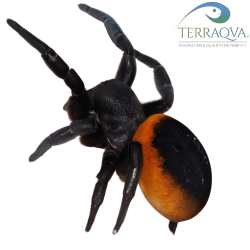
Widespread along the Mediterranean coast
Easy breeding,no need for humidity and high temperatures
Rare variety of Pterinochilus, on the market for a short time
Aggression level 5 - moderately aggressive if particularly stressed
Widespread mainly in Zimbabwe, Namibia
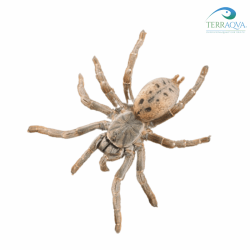
It has a gray body with a dotted abdomen
RARITA ' - one of the most beautiful and valuable tarantulas in the industry
Aggressive level 2 - uncisive and very sociable
Widespread in Africa, particular Island of Socotra
Rather voracious, it feeds quietly with a varied diet based on meal insects;
Difficulty level 3 - low; suitable for beginners
Terrestrial/Opportunistic
Slow growing and easy to care for
Cites B Certificate
EXTREMELY RARE - Not easily found on the market due to breeding difficulties.
Aggression Level 9 - Particularly fast and defensive, especially when threatened.
Distributed throughout Southeast Asia.
Ground-dwelling/fossorial tarantula, suitable only for experienced and knowledgeable terrarium keepers.
Aggressive level 2 - low; suitable for novices
Deserticola/opportunist
Very low, long-lived and static growth
Cites B Certificate
RARITA - for newbies and experts
Aggression level 3 - docile but sometimes nervous and quite quick
Arboricola, typical of the Cameroon jungle
Needs a height-developed, well-ventilated terrarium
Needed humidity around 70-80%
Aggressive level 7 - aggressive and unpredictable character
Widespread mainly in Cameroon
Tarantola ditch, suitable for the most experienced
RARITY - Rarely offered on the market and available for enthusiasts
Aggressiveness level 4 - Suitable for beginners, of medium management
Widespread in various areas of Nicaragua and Costa Rica
Slow-growing tarantula, with females living up to 25 years!
RARITA ' - It is not easily found on the market compared to others of the same family
Aggressive level 1 - low, very suitable for newbies or for those approaching the world of Tarantulas
Widespread in Paraguay and Argentina
Tarantola land, needs hiding/shelter
Difficulty level 7 - very fast and defensive if stressed
Widespread in Trinidad and Tobago
Tarantula quite resistant even to relatively low temperatures