Italiano


- Out-of-Stock

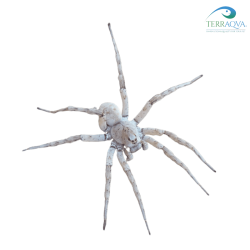
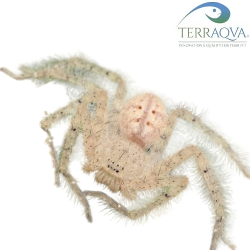
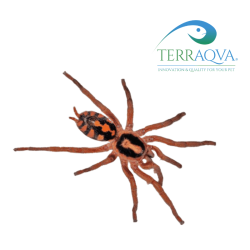
RARITY - Morph of a wolf spider, with a white color all over the body
Aggressiveness level 2 - Easy to manage, requires small and medium sized terrariums
Widespread in various areas of North America
Create a thick web inside the terrarium, quite voracious

We accept payments quickly, easily, and securely.

Express Courier
The slow hogna is a North American forest spider, easy to manage despite its frightening appearance. It does not require great care in its management and remains small in size
SIZE: about 1.5 / 2.5cm (adults)
ORIGIN: North America
AMBIENT VALUES: temperature 22 ° -23 ° C daytime, 20-22 ° C nighttime humidity 60-70%
FEEDING: small insects for spiderlings, and, from size M, meal insects (crickets, cockroaches, worms, locusts) of adequate size are good. Medium-sized isopods;
RECOMMENDED EQUIPMENT: small terrarium and faunabox, starting at 15x10x10 cm or larger. Substrate of about 3/4 cm with peat to be kept never dry and nebulizations are necessary every 2-3 days for a minimum of internal humidity, being however a spider of temperate wooded areas and, in this way, the hydration of the spider is favored . Optimal ventilation is also important to avoid the formation of molds or mites, however advising to maintain a higher humidity in correspondence of the den, much appreciated by the spider.
HABITS: diurnal arachnid, creates burrows near rocks and shrubs, with slightly humid areas
AGGRESSIVITY: 1 - suitable for beginners, with a calm temperament, purely aggressive towards the prey provided and relatively docile towards the enthusiast. It prefers to flee rather than attack but, in some cases, its bite is a bit painful.
RAPID GROWTH: average, it can live, according to the current scientific literature, even 4/5 years
STATUS CITES: no
CLINICAL / TOXICOLOGICAL INFO: WCH ADELAIDE UNIVERSITY; AUSTRALIA
Specific References
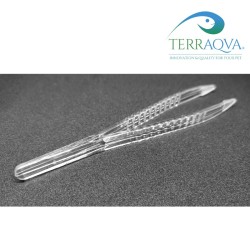
12.5 cm pliers made of rigid plastic, easy sanitizes
Ideal for administering live food or removal of residues
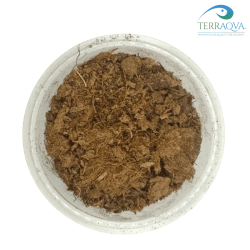
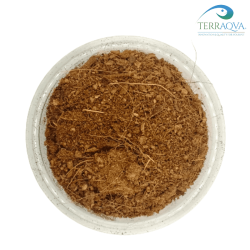
Pack 5 Litres
Acid ph and moist acids reduce odors and provide good moisture
Suitable for migals and scorpions but also reptiles and amphibians that need a soft and damp substrate
Difficulty level 2 – very docile and suitable for beginners
Mainly arboreal species
Can be kept at room temperature, provided it does not drop below 20°C
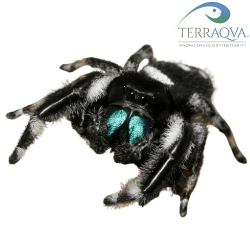
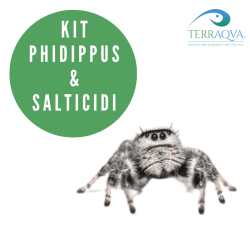
Complete kit to start the breeding of a Phidippus regius and other spiders
The kit contains feed and decoration!
RARITY - rare to find in the terrarium sector
Aggressiveness level 2 - Easy to manage, requires particularly tall terrariums or boxes
Widespread in a small area of Georgia, in the USA
Creates a dense web, to capture prey and can reach up to 9 cm (legspan included)
RARITA ' - It is not easily found on the market compared to others of the same family
Aggressive level 3 - low, suitable for newbies thanks to the quiet disposition
Widespread in various areas of Chile and Bolivia
Aggressive level 4 - low, suitable for newbies and not particularly aggressive
Widespread in various parts of Brazil
Particularly voracious variety, which accepts every food provided
RARITY - It has the characteristic central horn on the carapace
Aggressiveness level: 8 - suitable for the more experienced, given the speed and unpredictability together with their venom
Medium growth, up to 15 cm (including legspan)
Arboricola, present in various areas of Zimbabwe
Aggressive level 8 - very aggressive and with a nervous temperament
Arboricola, typical of West African forests
Needs a terrarium developed in height and well-aired
Aggressiveness level: 8 - Suitable for experienced terrarium keepers, quite aggressive.
Behavior: Opportunistic, fast-growing, and rapid in movement.
Habitat: Tropical environment, South America.
RARITA ' - It is not easily found on the market compared to others of the same family
Aggressive level 1 - low, very suitable for newbies or for those approaching the world of migals
Widespread in Paraguay and Argentina
Tarantola land, needs hiding/shelter
Aggressive level 3 - medium/low; suitable for newbies
Semi-arboreal species
Fast and easy-to-farm growth
Aggressive level 4 - medium/high; suitable for newbies
Terricola/opportunist, tropical environment
Fast and easy-to-farm growth
Cites B Certificate
Aggressive level 3 - very quiet species
Digger, typical arid environments Mexico and Costa Rica
Medium-low growth, very easy to manage
Cites B Certificate
Difficulty level 3 - suitable for beginners but can perform occasional quick runs
Terrestrial, mainly found in Colombia
Fast growing and voracious species
RARITA ' - It is not easily found on the market compared to others of the same family
Aggressive level 8 - medium/high, assumes the classic defensive posture if threatened
Widespread in various areas of Brazil and Suriname
Tarantola characterized by the coloration on the legs, similar to human bones
Aggressive level 5 - character rather nervous but not always aggressive
Widespread in Brazil and surrounding areas
Rather voracious, it reaches a size of up to 17 cm
Difficulty level 5 – temperament can be skittish at times, but not difficult to care for
Found in Venezuela
A species capable of "sculpting" the terrarium, making extensive use of its thick webbing
Aggressive level 2 - quite low
Widespread in the US and Australia
Arboreal spider with features similar to other jumpicides (e.g. phidippus)
Easy breeding in rather small terraces
RARITY - It has the characteristic central horn on the carapace
Medium growth, up to 15 cm (including legspan)
Fossorial Tarantula, widespread in various areas of Zimbabwe