Italiano


- Out-of-Stock


Aggressiveness level: 1 - Easy to breed and docile
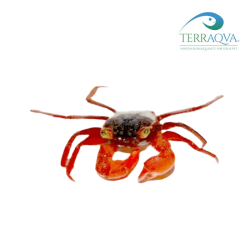
Beautiful orange color with white legs
Omnivorous, it feeds on fruit, vegetables, pieces of fish

We accept payments quickly, easily, and securely.

Express Courier
Geosesarma sp. Whitehand or White arm is one of the few varieties of crabs that reproduce in fresh water, it needs a paludarium of about 40 cm and in groups of at least 3 specimens (male plus two females) and are omnivorous
DIMENSIONS: Mixed size, can be kept on dimensions not exceeding 4/5 cm as an adult (legs included)
ORIGIN: Asia
AMBIENT VALUES: temperature 28 ° -30C during the day, 24-25 ° C at night, humidity 70-80% at night
FEEDING: meal insects (crickets, cockroaches, worms, locusts) of adequate size. Medium sized isopods, quite voracious. In particular crickets are indicated as they are highly protein. They also accept gammarus and dry food
RECOMMENDED EQUIPMENT: medium / small terrarium or faunabox, 30x25x25; The substrate should be around 10-15 cm high structured peat mixed with coconut fiber, with the presence of some pieces of bark, much appreciated by this variety. It is necessary to spray the environment every 2 days, thus favoring the maintenance of a correct humidity gradient, which is very important for these crabs. The presence of live moss and foliage is important, as they are also used as an additional food supplement.
A freshwater pool is essential for these crabs, who like to stay there for some time and then come out again
An escape-proof locking system is important, as these crabs are skilled climbers and are very fast.
HABITS: land crab that spends most of the day holed up or in the waterhole of the terrarium water
AGGRESSIVITY: 1 - rather docile even if this can vary according to the specimens, even of the same family and can be hosted in the measure of 1 male and 2 females minimum
RAPID GROWTH: average
STATUS CITES: no
CLINICAL / TOXICOLOGICAL INFO: WCH ADELAIDE UNIVERSITY; AUSTRALIA
Specific References
One of the rarest and most colorful crabs on the market
Aggressiveness level 1 - Suitable for beginners, easy to manage and resistant
Widespread in various areas of Costa Rica and Mexico
It has nocturnal habits, omnivorous, has beautiful colors
Aggressive level: 1 - Easy breeding and docile
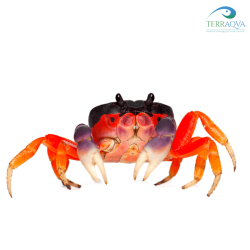
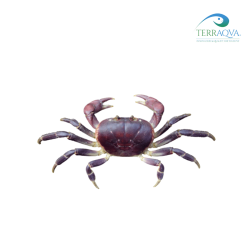
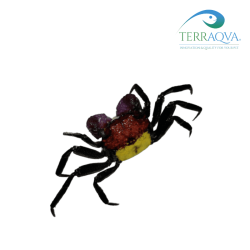
Very bright purple coloring
Omnivore, feed on fruits, vegetables, pieces of fish
Aggressiveness level: 1 - Easy to breed and docile
Very bright purple color
Omnivorous, it feeds on fruit, vegetables, pieces of fish
It requires a large aquatic part, with brackish water
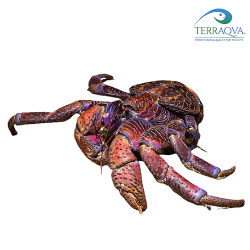
Large land crab (up to 20/25 cm in size)
Aggression level 2 - not aggressive but rather voracious towards the food offered
Widespread in Sumatra and Java
It requires a medium sized paludarium, with a large terrestrial part
Aggressive level: 1 - Easy breeding and docile
Very bright purple coloring
Omnivore, feed on fruits, vegetables, pieces of fish
Aggressiveness level: 1 - Easy to breed and docile
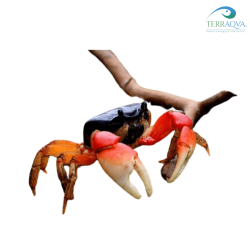
Orange color, also called mandarin crab
Omnivorous, it feeds on fruit, vegetables, pieces of fish
RARITY - Comes from a small area of the Andaman Islands
Particular giant crab, very colorful and refined
It needs a freshwater marsh and a brackish pool
Omnivorous, it feeds on fish, fruit and insects
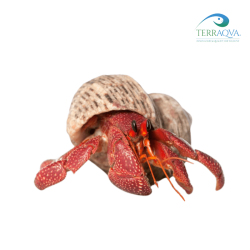
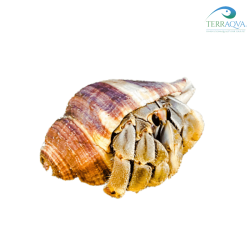
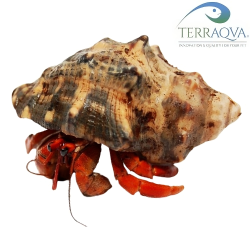
Difficulty level: 6 - Docile animal, but like all hermit crabs, it is necessary to follow many precautions to correctly keep the specimens
Very bright purple coloring
Omnivore, feed on fruits, vegetables, pieces of raw fish
Aggressive level: 1 - Easy breeding and docile
Very bright purple coloring
Omnivore, feed on fruits, vegetables, pieces of fish
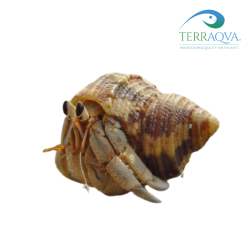
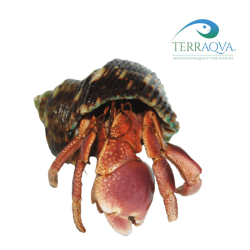
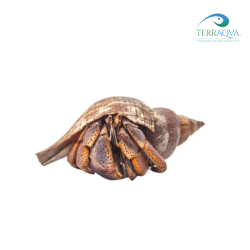
One of the most popular hermit crabs among neophytes
Aggressiveness level 1 - Suitable for beginners, easy to manage and resistant
Widespread in various areas of Ecuador, it has a balanced omnivorous diet
It has nocturnal habits, resting during the day away from the heat of the sun
Rare and beautiful variant of Coenobita perlatus, with much darker shades
Aggressiveness level 1 - Suitable for beginners, easy to manage and resistant
Widespread in various areas of Ecuador, it has a balanced omnivorous diet
It has nocturnal habits, resting during the day in the heat from the heat of the sun